
7 Things Law Firms Should Do Before Switching Marketing Agencies ( Do Not Miss #4 )
1. Understand What You Actually Own
Start here before anything else. You should be able to answer:
- Who hosts my website?
- Do I own my domain?
- What platform is my site built on?
- Do I have access to Google Analytics and Search Console?
- Who controls my Google Business Profile?
- Who owns my ad accounts and lead tracking systems?
A lot of firms don’t know these answers — not because anything is wrong, but because they’ve trusted the same team for years. That’s fine. But you need to know before you can make any informed decisions. A good agency will walk you through this without hesitation.
2. Find Out Where Your Leads Are Actually Coming From
You probably know leads are coming in. The question is which strategies are actually producing them.
Dig into: which practice areas are generating signed cases, which traffic sources convert, whether SEO and paid ads are each pulling their weight, and which pages are driving calls.
This matters because one channel is often quietly outperforming everything else — and firms sometimes cut it without realizing it. The reverse is also true: firms spend heavily on campaigns that generate almost nothing.
3. Identify the Weak Spots Before You Make a Move
Not every problem requires switching agencies. Sometimes it’s a communication issue. Sometimes the content is just outdated. Sometimes the strategy hasn’t kept up with how people search today.
Before making a drastic decision, figure out what’s actually broken:
- Is the website outdated visually or content-wise?
- Are rankings dropping?
- Is the firm too dependent on one lead source?
- Is the agency bringing new ideas — or just maintaining?
- Has anyone looked at how the firm performs in AI-driven search?
That last one is increasingly worth asking.
4. Find Out Where Your Firm Shows Up in AI Search
This is the one most firms are ignoring right now.
People are asking legal questions directly inside ChatGPT, Gemini, and AI-assisted search before they ever visit a website. Most law firms don’t know if they’re visible there at all.
The websites that tend to appear in AI search results share a few traits: clear structure, detailed practice area pages, content organized around real questions people ask, and information that’s actually current.
Your agency should be able to tell you whether you’re getting AI-related traffic, which pages are driving it, and whether your content is structured to perform in that environment. If they can’t, that’s worth noting.
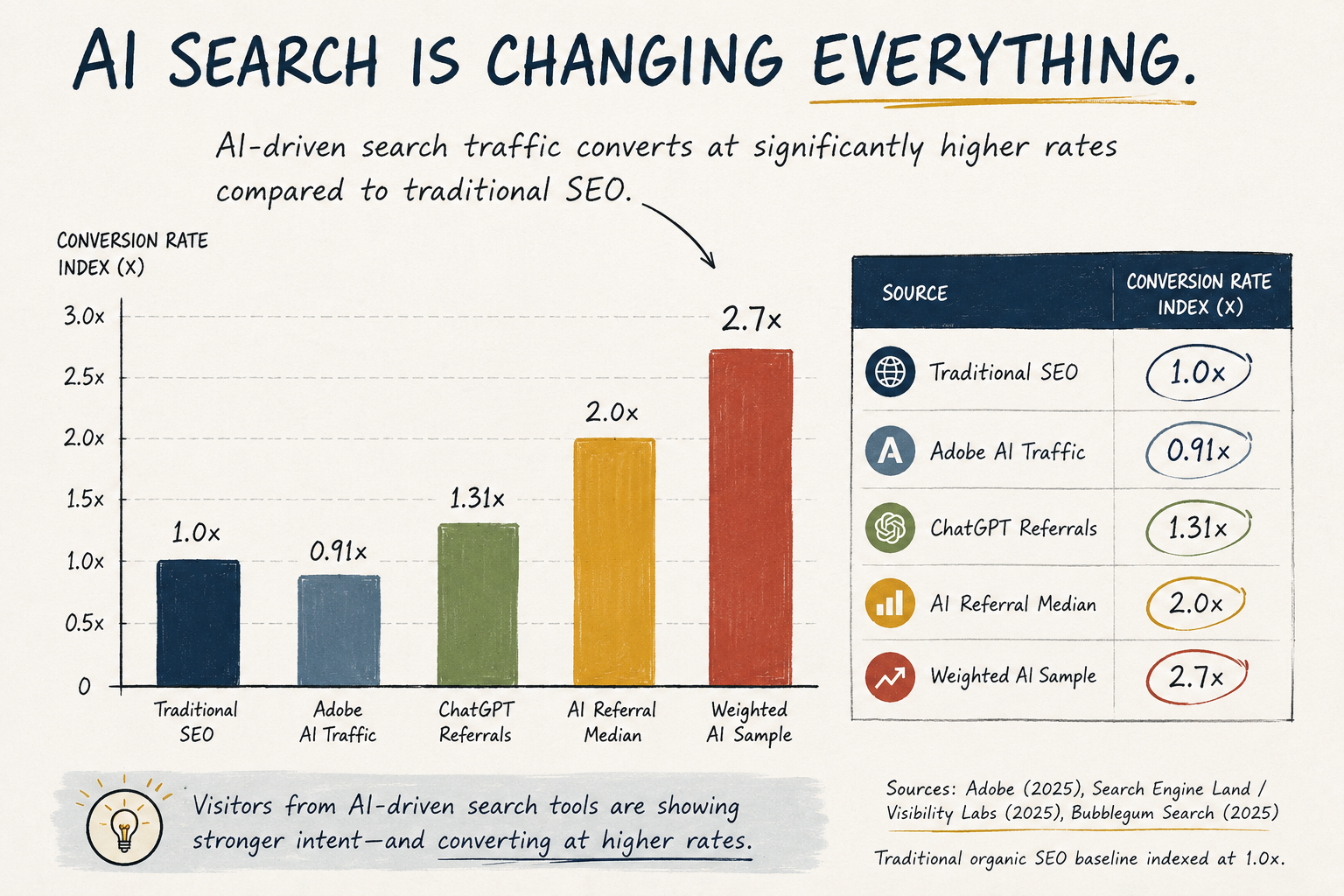
Traffic from AI search tends to convert at a higher rate than traditional organic — users arriving that way are typically further along in their decision before they land on your site.
5. Review and Refresh Your Content
Most law firm websites have years of accumulated content that no one has looked at — old blog posts, thin location pages, outdated legal information, duplicate pages. Any content that is over four years old is hurting you on both google and in AI searches.
Go through your most important pages and ask: when was this last updated, is it still accurate, is it useful to an actual person, and should it stay or go?
Refreshing strong existing content is usually more valuable than creating new pages. Google rewards sites that stay current and relevant, not just sites that keep adding.
6. Save Everything Before You Make Any Changes
If you’re considering a transition, back everything up first:
- Website files and blog content
- Analytics and lead tracking history
- Call recordings
- Ad creatives and keyword reports
- Form submission data
- Social media assets
Don’t assume this transfers automatically. Even in a clean, professional transition, historical data can get lost. Get it before you start.
7. Decide Whether Your Current Agency Can Evolve With You
After going through the steps above, the real question usually becomes clearer on its own.
Sometimes firms realize they just need better reporting or more proactive communication — and that’s worth a conversation before making any moves.
Other times, they realize the industry moved faster than their current strategy did.
Either way, the decision should be based on what the data shows — not on frustration alone. A good agency relationship should feel collaborative, and your agency should be able to explain strategy clearly, adapt to industry changes, and be honest about where the gaps are.
If they can’t do that, you have your answer.
Final Thoughts
The bottom line is this.
Most law firms are struggling with marketing right now because the environment evolved quickly, and their strategy hasn’t kept up. We know because we watched it happen in real time.
We’re a small agency competing against firms with bigger teams, bigger budgets, and more name recognition. When AI changed search, we felt it — and so did our clients. Across every budget level, the same things started happening at once. Outbidding competitors on Google wasn’t enough anymore. Content that had performed for years stopped pulling traffic. Organic SEO strategies that had worked reliably for a decade had to be rebuilt from scratch. We watched all of it unfold across our entire client base simultaneously, and we had no choice but to figure it out fast — for them and for ourselves.
That’s where this checklist came from. It’s not a list of things we read about. It’s what we actually lived through, adjusted for, and rebuilt around so we could confidently help others do the same.
Visitors from AI-driven search convert at 2.7x the rate of traditional SEO traffic — and the firms showing up there are rapidly pulling ahead of firms still optimizing for a version of Google that no longer works the same way it did three years ago. AI is also making it increasingly more attainable for smaller firms to compete with large corporate budgets without breaking the bank. The playing field is not level yet — but it’s closer than it has ever been.
Going through this checklist won’t fix everything overnight. But before you fire your agency, change your budget, or start over from scratch — know where you actually stand first. That’s the only honest place to start.
If you go through all seven and your strategy is solid, great. You’ve confirmed something worth knowing. If you find gaps, now you know exactly where to focus.
Either way, you’re making decisions based on what’s real.
That’s the point.